Introduction
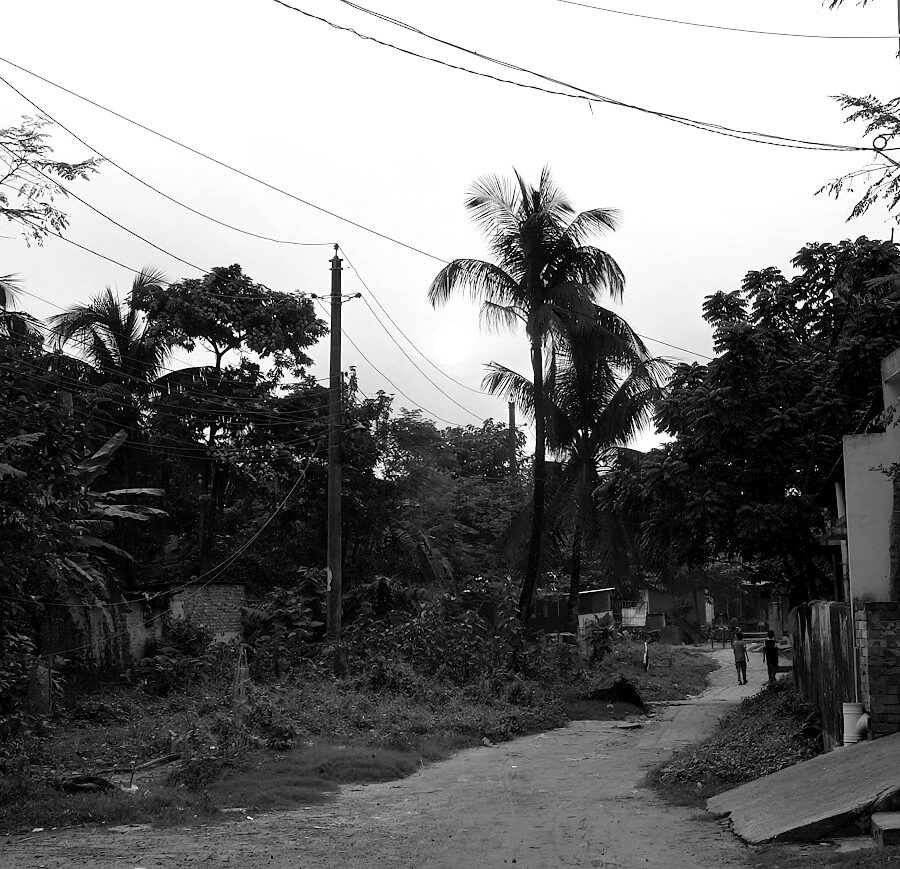
Informal urban spaces play an important role in rapidly urbanising cities of the Global South, where formal planning systems and regulated markets often struggle to accommodate everyday economic and social activities. These spaces are not merely outcomes of inadequate planning; they can also support livelihoods, sustain local economies, and facilitate social interaction. However, their contributions often coexist with environmental degradation, inadequate infrastructure, and insecure working conditions.
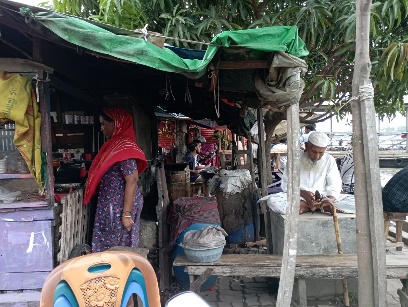
Rupsha Ghat, located along the Rupsha River in Khulna, Bangladesh, illustrates this complex relationship. Historically serving as an important access point for people travelling from areas including Bagerhat, Pirojpur, and Barisal, the ghat has developed into a vibrant place of exchange and everyday public life. Informal vendors, particularly tea-stall operators, occupy the riverside edge beneath temporary shelters constructed from locally available materials such as bamboo, timber, and tin.
Informality as an Urban Opportunity and Challenge
The informal vendors of Rupsha Ghat contribute to the area's economic and social vitality. Their small businesses provide accessible goods and refreshments for local residents and travellers while creating livelihood opportunities for economically vulnerable groups. Tea stalls also function as informal social spaces, attracting people from early morning until late at night. These everyday interactions contribute to the site's public character and demonstrate how informal commercial activities can generate urban life beyond formally designed public spaces.
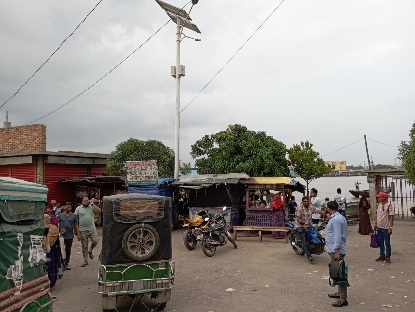
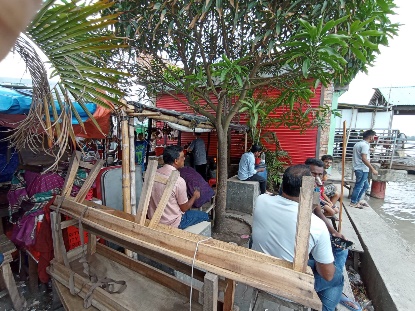
Nevertheless, the coexistence of commercial activities and inadequate infrastructure creates significant challenges. Unplanned occupation, traffic congestion, limited circulation, and insufficient space for seating and storing goods constrain the functionality of the area. Environmental concerns include inadequate drainage, waterlogging during rainfall, limited vegetation, and the disposal of waste into the river. In addition, the temporary construction of vendor structures and the threat of eviction contribute to uncertainty about livelihoods and the future use of the site.
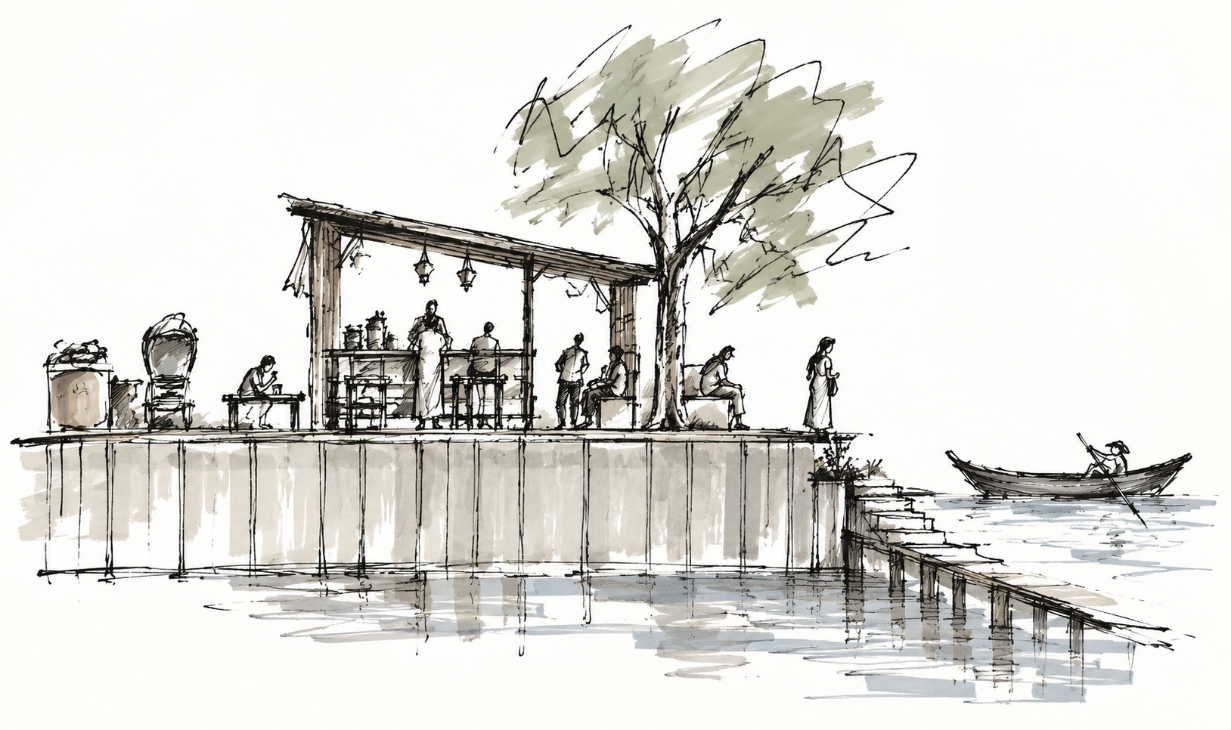
These conditions reveal a tension between the everyday value of informal urban activity and the limitations of the physical environment in which it operates. The riverfront possesses considerable potential as a public space, yet its relationship with the river remains underdeveloped. Although the riverside attracts people and supports commercial activity, environmental pressures and the lack of adequate spatial arrangements limit its potential as an inclusive and well-functioning waterfront.
Rethinking the Informal Riverfront
Rupsha Ghat highlights the need to reconsider how informal commercial spaces are understood within urban design and riverfront planning. Rather than treating vendors solely as obstacles to formal development, planning approaches could recognise their contributions to local livelihoods, public interaction, and the everyday economy. Improving circulation, drainage, waste management, shaded seating, and the relationship between commercial activities and the river could help address existing challenges while retaining the site's social and economic functions.
Such an approach requires attention not only to the physical improvement of the waterfront but also to the security of vendor livelihoods and the continued accessibility of the space to diverse users. The challenge is therefore to develop an inclusive riverfront environment that responds to environmental constraints without displacing the informal activities that give the place much of its everyday vitality.
Conclusion
Rupsha Ghat demonstrates that informal urbanism is neither entirely problematic nor inherently sustainable. It represents a dynamic relationship between livelihood practices, public life, physical space, and environmental conditions. Understanding this relationship can contribute to more inclusive approaches to riverfront design in Khulna and other cities of the Global South, where the future of public space depends partly on recognizing and working with the informal practices that already sustain it.